Editorial sample: This article demonstrates the article template. It is not presented as Perry’s firsthand work and needs review or replacement before launch.
An attribution report answers a narrow question: under a platform’s rules, which touchpoint gets credit for an order? That is often useful for investigating a channel. It does not, by itself, tell you how many of those orders would have disappeared if the campaign had not run.
Two questions, two methods
Attribution is a bookkeeping model. It assigns observed outcomes to recorded interactions. Incrementality asks about a counterfactual: what would have happened without an intervention?
The second question is harder. It usually requires a credible comparison, such as a holdout, randomized test, or carefully designed natural experiment. Even then, the details of the comparison matter.
| Question | What to inspect | Main limitation |
|---|---|---|
| Which interactions preceded orders? | Attribution report | Credit rules shape the answer |
| Did the campaign create additional orders? | A sound comparison or experiment | The comparison must be credible |
| Was it profitable? | Incremental margin and campaign cost | Costs and spillover may be incomplete |
A more careful reading
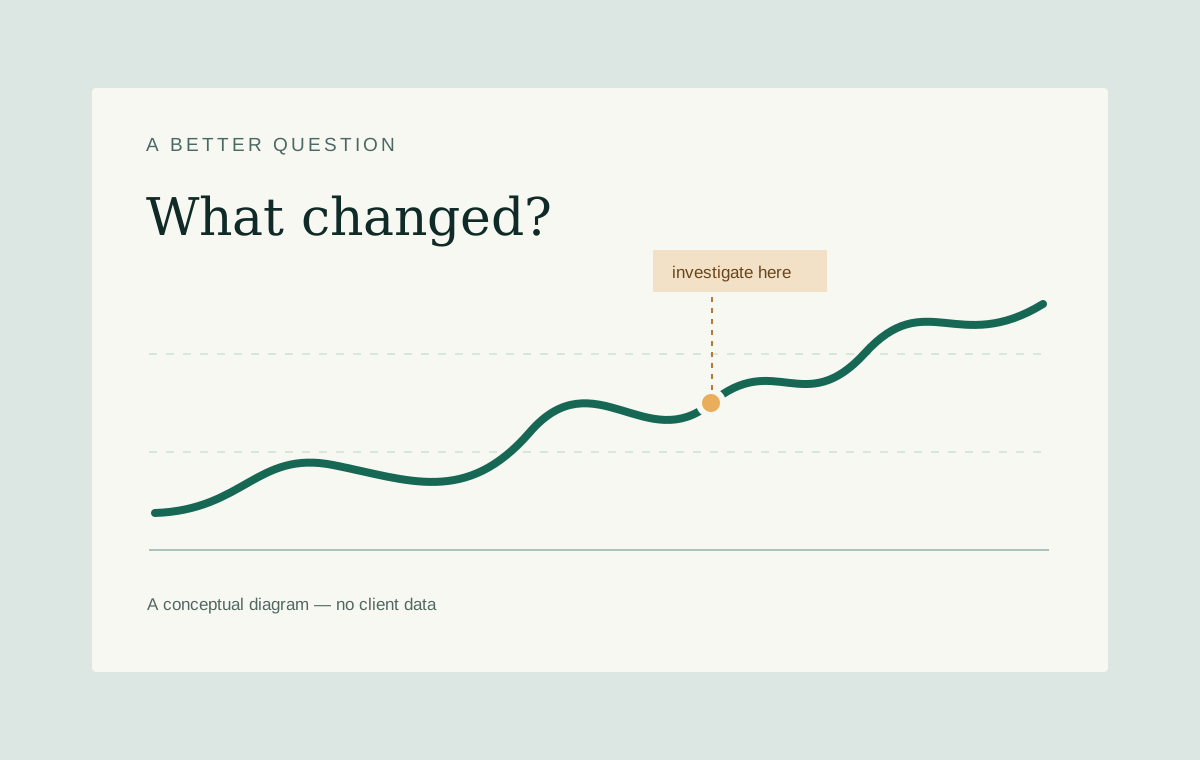
Use attribution as a clue about where to investigate. Before changing spend, check the rules behind the number, the lookback window, overlap with other channels, and the outcome that matters to the business. When the stakes justify it, test the effect directly.
Related: Before changing the campaign, ask what the dashboard can actually tell you.